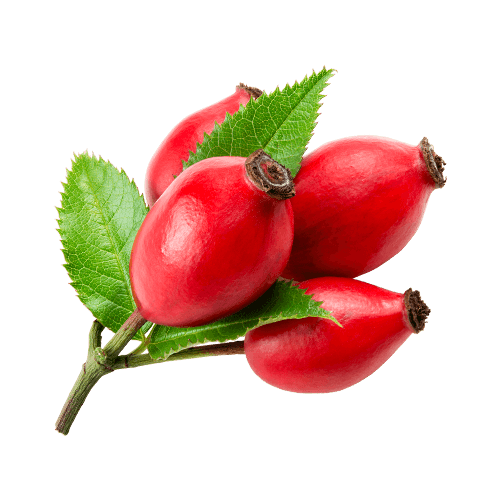
Rosehip
Rosehip
Is Rosehip Faithful to Nature?
Rosehip is a natural ingredient with many remarkable benefits that can be farmed sustainably and supports many rural communities, especially in Lesotho.
Benefits: Why is Rosehip used?
Collagen Booster
Potent Anti-Oxidant
Ellagic Acid
Animal Supplement
Learn more about Rosehip:
Rosehip and rosehip oil can be found as single ingredient products but are often used by natural cosmetic formulators in hydrating serums with powerful anti-ageing effects.
Rosehips are collected by hand from mature rose plants. They are then typically sun-dried and ready for use. The dried rosehips can be further refined into rosehip oil using an expeller press or supercritical CO2 extraction.
Rosehips contain approximately 426 mg of vitamin C per 100 grams according to the United States Department of Agriculture (USDA).
Research suggests that the vitamin C content of rosehip is dependent on the altitude at which the plants were grown. The higher, the better! In Southern Africa, rosehip grown in Lesotho is particularly prized for its quality.
Rosehips are the accessory fruiting body of the rose plant, separate and distinct from the flower.
While many tote the benefits of rosehip tea as a source of vitamin C, this is not strictly true. Vitamin C begins to denature at temperatures as low as 30°C, and since rosehips are added to boiling water (~100°C) to draw a delicious, flavourful and aromatic tea, the vitamin C content will suffer as a consequence.


