Propolis
Propolis
Is Propolis Faithful to Nature?
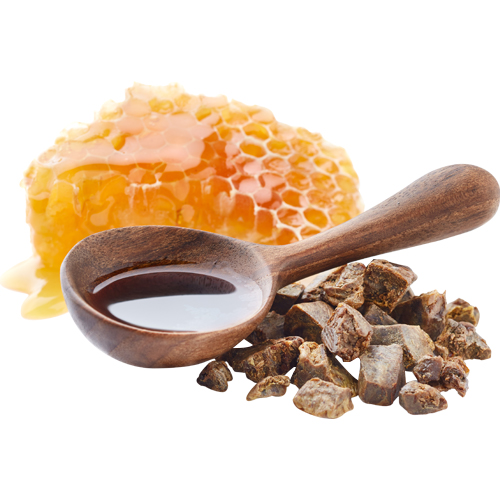
Propolis is a natural product from the beehive with many remarkable properties and a rich, ancient history of uses. Additionally, supporting beekeepers helps to support bees who are responsible for pollinating approximately one third of all food produced globally.
Benefits: Why is Propolis used?
Potent Antioxidant
Skin Restorative
Effective Antibacterial
Trusted Anti-inflammatory
Learn more about Propolis:
Propolis can be found on store shelves as a tincture (dissolved in alcohol), or as an ingredient in skincare products like lotions, creams, moisturisers, balms and even soaps.
Raw propolis can be used in chunks, simply as it was harvested from the beehive. It can be freeze dried and subsequently ground into a powder. It can also be extracted in a wide variety of different substances. Often, it is refined in an ethanol solution, though some manufacturers use coconut oil.
Not all types of honey bees produce propolis. The type of bee most commonly used as a source of propolis is Apis mellifera, otherwise known as the Western honey bee.
It’s difficult to generalise about the potential powers of propolis since its underlying chemical composition is highly dependent on the flowering plants and trees to which the bees have access. Propolis from the Western Cape will be different to propolis from Europe…
Some people, especially beekeepers, may develop a mild allergic reaction to propolis. Symptoms reportedly include dryness and irritation. If you experience severe reactions to bee stings, it’s best to be safe and avoid propolis containing products. Additionally, if you experience any skin irritation after using a propolis containing product, discontinue use immediately.
Bees are essential for global food security. Approximately one third of all food produced in the world relies on bees for pollination.
Statistics from The World Bee Project:
- 87% of the world’s flowering plant species depend on pollinators.
- 77% of the global food supply depends on pollinators. US$ 235 billion - US$ 577 billion worth of annual global food production relies on pollinators.
- 1.4 billion jobs worldwide rely on pollinators.
Products Containing Propolis
Shop All


